


Updated November 2026, on Cotality’s October figures.
A buyer’s agent is worth it when what they save you, or the mistake they stop you making, is worth more than their fee. For most people buying a family home in Brisbane that comes down to three things: knowing what the house is worth before you make an offer, negotiating well against a selling agent who does this every day and having the time to find the right home in the first place. If you already have all three, you may not need one, and I’ll explain below how to tell.
So is a buyer’s agent worth it for you? Here is how I’d work it out if I were in your shoes, including the times I’d tell a friend to save their money.
Is a buyer’s agent worth it in Brisbane right now?
In a softer market like this one, a good buyer’s agent is often worth more than in a rising market, because the hard part has shifted from winning the house to paying the right price for it.
On the ground, prices have eased across Brisbane since May. Cotality puts the median Greater Brisbane house value at $1,111,530 at the end of October 2026, down 6.2% over three months. Brisbane dwelling values fell 2.0% in October alone, the largest monthly fall of any capital city, and are 8.3% below their May 2026 peak. Across the capital cities, homes are taking a median 39 days to sell, the typical vendor discount has widened to 4.7% and listings are at their highest level for this time of year since 2019.
For a buyer that is good news: more choice, more time and more room to negotiate. The catch is that plenty of asking prices still reflect last autumn. With a typical discount of 4.7%, the gap between a well-negotiated purchase and an average one on a median-priced Brisbane house is about $52,000. That gap is where a buyer’s agent earns their fee, or doesn’t. My latest read on the numbers is on my Brisbane house prices page, which I update every month.
How do you work out whether a buyer’s agent pays for itself?
Put the fee next to what is at stake on the price. On a $1.5 million family home, every 1% is $15,000. Paying 3% too much is $45,000, which is comfortably more than my fixed fee at that price, and that money stays in the purchase for as long as you own the house. Paying the right price, on the other hand, protects you on day one and again when you sell.
Then add the things that are harder to put a number on:
- The house you don’t buy. A home with overland flow on the lot, a busy road at the back or a structural problem behind fresh paint can cost far more than any fee. Walking away from the wrong one is often the most valuable thing a buyer’s agent does.
- Your time. Searching properly can take months of Saturdays at open homes. A buyer’s agent does the screening, so you only see the homes worth seeing.
- Your nerves on the day. Auctions and multiple-offer situations are where buyers most often pay more than they meant to. Someone who bids and negotiates every week stays calm because it isn’t their money or their home.
If the fee is small next to all of that, a buyer’s agent is worth it. If you can do those things yourself just as well, it may not be.
When is a buyer’s agent most worth it?
In my experience these are the situations where a buyer’s agent makes the biggest difference:
- You’re buying near the top of your budget. A small overpayment hurts most when there’s no room left in the numbers.
- You’re moving to Brisbane from interstate or overseas. Suburbs that look alike on a map can be very different street by street. My guide to relocating to Brisbane covers the basics.
- You don’t know the area well. Flooding, overland flow, character overlays and school catchments can all change what a house is worth. I check every one, as in my guides to checking whether a property is flood affected and the Traditional Building Character overlay.
- You keep missing out. If you’ve been outbid at a few auctions, a change of approach often matters more than a bigger budget.
- You’d like to see homes before they’re advertised. A good buyer’s agent hears about off-market properties through selling agents they deal with every week.
- You’re busy. Young families, people running a business and anyone working long hours tend to value the time saved as much as the money.
When might you not need a buyer’s agent?
There are times I’d tell a friend they can probably do it themselves. You may not need a buyer’s agent if you’ve lived in the street or suburb for years and follow every sale, you have the time to inspect and research properly, you’re comfortable negotiating face to face and the purchase is simple, such as a modest unit in a building you know well.
Even then, one thing worth having is an independent view of value before you make an offer. My article on the difference between a buyer’s agent and a property valuer explains which one suits which situation.
What does a buyer’s agent actually do for the fee?
The work varies between agents, so ask for it in writing. Mine covers the whole purchase:
- Setting the brief with you: suburbs, type of home, must-haves and budget.
- Searching on and off market and screening out anything with flooding, a main road or other problems before you see it.
- Inspecting and assessing each property properly, not just walking through it.
- Working out what the property is worth from recent comparable sales before any offer is made.
- Negotiating with the selling agent or bidding for you at auction.
- Coordinating the due diligence with your solicitor, building and pest inspector and lender.
- Managing the contract through to settlement.
I also offer auction bidding on its own and negotiation only for a home you’ve already found.
What are the downsides of using a buyer’s agent?
The main one is cost: it is a professional fee on top of stamp duty and the other costs of buying. Beyond that, the risks come from choosing the wrong agent rather than from using one at all:
- A buyer’s agent who takes payments from selling agents or developers has a conflict of interest. Ask directly whether they receive anything from the other side.
- A fee set as a percentage of the price quietly rewards a higher price. A fixed fee agreed in writing before work begins removes that.
- An agent who can’t explain how they arrived at a figure for a property is guessing, and you are paying for that guess.
Some buyers also worry about handing over control. You shouldn’t have to: a good buyer’s agent shortlists and advises, and you make every final decision.
How do you choose a buyer’s agent who is worth the fee?
These are the questions I’d ask any buyer’s agent, myself included:
- Are you licensed? In Queensland, buying property for someone else for a fee is a licensed activity under section 26 of the Property Occupations Act 2014, so a buyer’s agent must hold a real estate agent licence. You can check a licence on the Queensland Government’s Office of Fair Trading website.
- How will you work out what this house is worth? Listen for recent comparable sales and adjustments for the differences, not a feel for the market.
- Is your fee fixed, and what does it include? Fees should be agreed in writing before any work starts. Mine are fixed, set by purchase price and published on my website.
- Do you work only for buyers? Someone who also sells property is working both sides of the market.
- How well do you know the suburbs I’m looking at? Ask for recent purchases nearby and what they learned from them.
- What do past clients say? Read the Google reviews, not just the testimonials on their website.
Frequently asked questions
How much does a buyer’s agent cost in Brisbane?
Most buyer’s agents charge either a percentage of the purchase price, commonly somewhere between 1% and 3%, or a fixed fee. I charge a fixed fee set by the purchase price, agreed in writing before work begins and never tied to the price you pay. My fees are on the buyer’s agent fees page.
Can a buyer’s agent save me money?
Often, yes, mainly by stopping you from overpaying and by steering you away from a house with problems that would cost you later. In a market where the typical vendor discount is 4.7%, the difference between a strong and an average negotiation on a Brisbane family home can run to tens of thousands of dollars.
Is a buyer’s agent worth it for a first home buyer?
It depends on your budget and how well you know the area. If you’re buying a modest unit in a suburb you know, you may manage well on your own. If you’re stretching for a house in a competitive suburb, the fee is often small next to the risk of paying too much.
Do buyer’s agents have access to off-market properties?
Good ones do, because selling agents often call buyer’s agents who have a qualified buyer ready before they advertise a home. It isn’t guaranteed for every brief, so treat off-market access as a bonus rather than the main reason to hire one.
Do I still need a solicitor and a building and pest inspection?
Yes. A buyer’s agent doesn’t replace your solicitor, building and pest inspector or lender. I work alongside them and can introduce you to people I trust.
Thinking about buying in Brisbane?
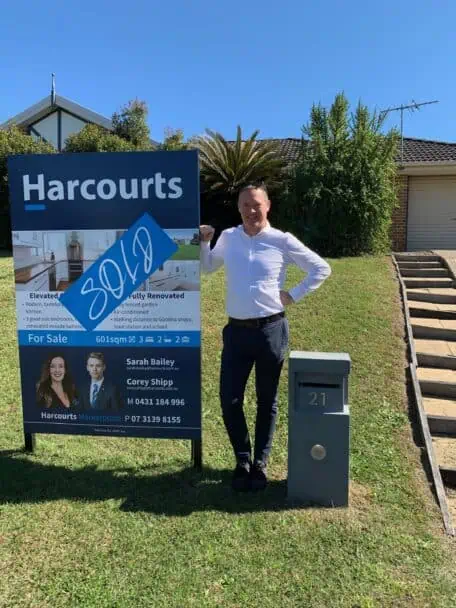
If you’re weighing up whether a buyer’s agent is worth it for your next purchase, I’m always happy to talk it through, whether you’re looking in the inner west (Ashgrove, Bardon, Red Hill, Paddington, The Gap and Auchenflower) or anywhere across Brisbane. You can book a free discovery call at a time that suits you.
Take care, Sam Price. Buyer’s Agent and Registered Property Valuer, Brisbane.
Sources: Cotality Home Value Index, November 2026 release (data to 31 October 2026); Property Occupations Act 2014 (Qld), section 26; Loan Market, “The pros and cons of using buyer’s agents”.
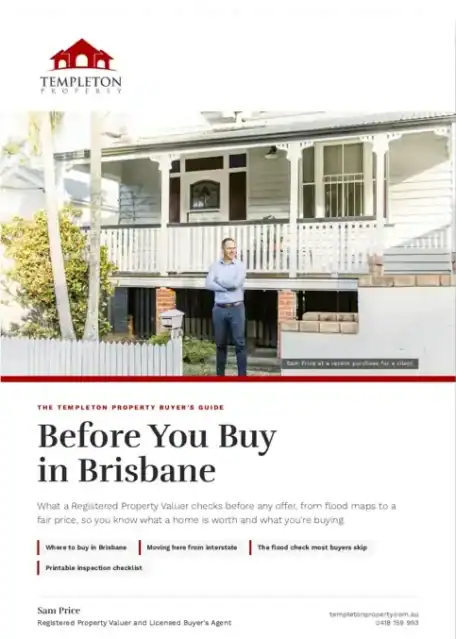
Before You Buy in Brisbane
The checks I run on every home, in one guide
- The flood check most buyers skip, step by step with the official maps
- Character overlays, zoning and what’s being built next door
- School catchments, noise, flight paths and easements