


Queensland has been the country’s biggest destination for people moving interstate for a while now and most of them are coming from New South Wales and Victoria. If you’re one of them, buying a home in Brisbane brings a particular challenge. You are making one of the biggest purchases of your life in a city you don’t yet know, often without being able to stand in the house before you commit. This guide walks through what interstate movers need to understand about buying in Brisbane and how to do it well from a distance.
Why getting this right matters
When you buy in a city you know, you carry a mental map. The good streets, the ones to avoid, where the water sits after heavy rain. Move interstate and you are starting from scratch, usually under time pressure, often trusting a price guide set by the seller’s agent. That is how people end up overpaying, buying in the wrong pocket, or landing a home with a problem they only discover after they have moved in. Brisbane rewards local knowledge more than most cities, because value here changes street by street.
Understand how Brisbane pricing works
Prices have moved a long way. Brisbane’s median house price is now above $1.2 million, having risen around 17 per cent in the year to mid-2026 and the city has closed much of the gap it used to have on Sydney and Melbourne. If you’re selling in Sydney and expecting Brisbane to feel cheap, it’s worth resetting that expectation gently. Your money goes further than it did five years ago, but the days of picking up an inner-city Queenslander for well under seven figures are behind us. Knowing what a given suburb and street actually commands is the difference between a fair offer and an expensive guess.
Learn the geography before you fall for a photo
Brisbane’s inner west, suburbs like Ashgrove, Bardon, Paddington, The Gap, Red Hill and Auchenflower, is leafy, elevated in parts and full of character homes. It is also where flood overlays, demolition controls and steep blocks catch buyers out. A house that looks perfect online might sit on a flood-prone flat, back onto an arterial road, or be locked into a character overlay that limits what you can change. Ridge lines matter here. So do 1947 aerial photographs, which the council uses to decide what can be demolished. None of this is easy to assess from interstate without help on the ground.
Sort out your stamp duty position
Here is some good news. As an Australian citizen or permanent resident moving from another state, you are not a foreign buyer, so the additional foreign acquirer duty does not apply to you. You may also be able to claim Queensland’s transfer duty home concession, which reduces the duty on your purchase and you can claim it even if you have owned a home before. The catch for relocators is the occupancy rule. You generally have to move in and live in the home within one year of settlement to keep the concession. If you are buying before you move and planning to rent the place out in the meantime, check the detail with your solicitor first, because it can change your duty bill. Treat this as a starting point, not tax advice.
Decide whether to rent first or buy before you arrive
There is no single right answer here. Renting for a few months lets you learn the city before you commit, which is sensible if you are not yet sure which pocket suits you. Buying before you move saves you a double shift and locks in a home while you still have your interstate equity in hand. Plenty of my relocating clients buy before they arrive, because I can be their eyes on the ground and they trust the process. What matters is going in with a clear brief either way.
Get someone local to inspect for you
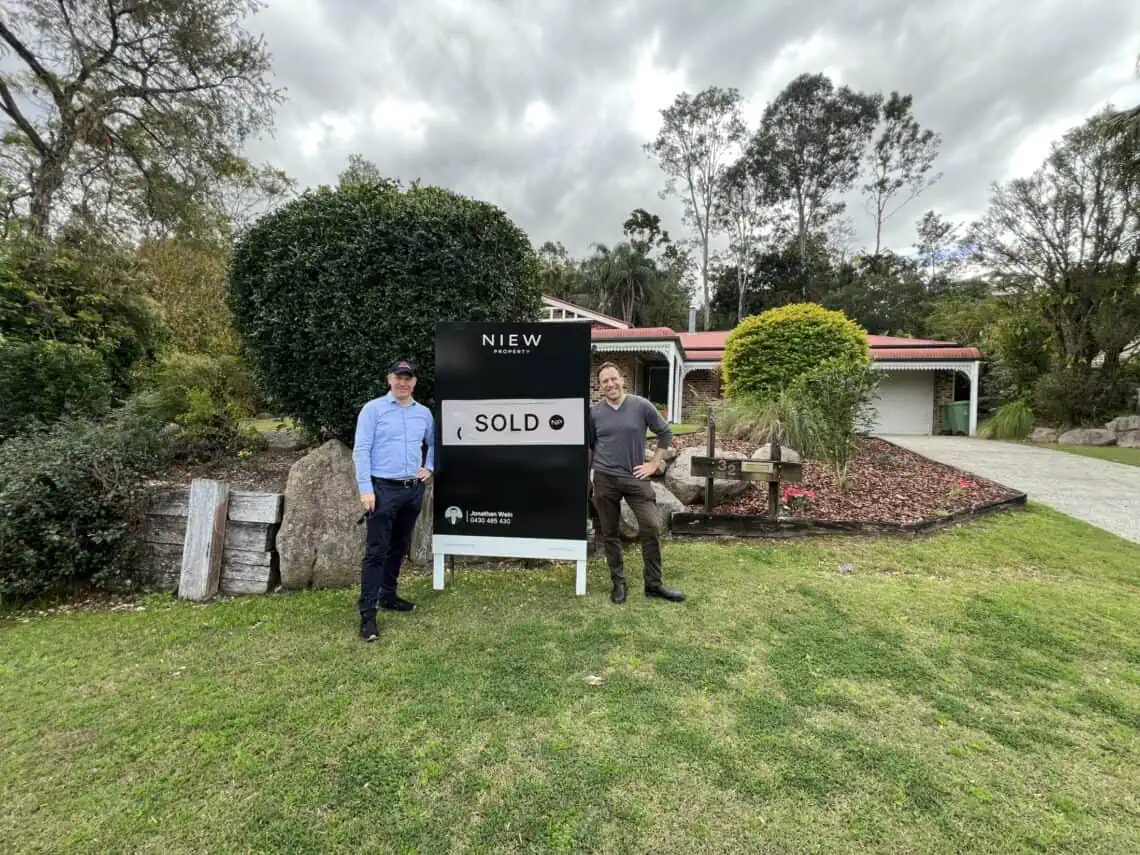
This is the practical heart of it. You can’t be at a Brisbane open home on a Saturday when you are working in Melbourne on the Friday. Photos and agents’ descriptions are marketing, not assessment. Someone needs to walk through the house, look underneath it, check the fall of the land, read the street and tell you the truth. This is exactly the work I do for clients relocating to Brisbane every week: a full inspection, a video walk-through with honest commentary and an independent view on what the place is worth before anyone talks price.
Understand how Brisbane sells
Not everything goes to auction here, but plenty does. Auction clearance rates have been sitting around 35 per cent in mid-2026, which means buyers have had the stronger hand and homes have been taking a median of around 23 days to sell. That is a market where a calm, informed buyer who knows value can do well and where an anxious relocator racing to buy before the moving truck arrives can pay too much. Time pressure is usually what trips people up. A bit of preparation is the thing that helps most.
Common mistakes interstate movers make
- Trusting the price guide. It is set by the seller’s agent, not by what the home is worth.
- Buying the suburb, not the street. Two homes a block apart can be very different buys.
- Ignoring flood and overlays. Brisbane’s flood history is real and specific to location.
- Rushing. Booking the removalist before you have secured a home, then buying under pressure.
- Assuming interstate rules apply. Queensland’s duties, concessions and contract conditions differ from where you are coming from.
My take
After 30 years working in property here, the thing I find myself saying to most people moving to Brisbane is that the home you can see online is the easy part. The value, the risks and the right price are what you are really buying. They tend to be local things, particular to the exact street you’re looking at and hard to see clearly from a distance. As a Registered Valuer I usually price a property in my own head before I ever talk numbers, so a seller’s guide doesn’t anchor me. And because I live in the inner west, I have a fair sense of which streets are worth paying up for and which just photograph well. Buying from a distance works perfectly well when you have someone local looking after the parts you can’t. If you’re thinking about relocating to Brisbane, or you simply want to talk through what I’m seeing on the ground, I’m always happy to share my view.
Take care,
Sam Price
Buyer’s Agent and Registered Property Valuer, Brisbane.