

Updated November 2026, on Cotality’s October figures.
Upsizing to a family home in Brisbane usually means moving from a unit or townhouse to a house with a yard. In the inner west, the families I work with typically spend between $1.2 million and $4 million on that house, and on Cotality’s median values the step up from a unit in the same suburb is roughly $930,000 to $1.17 million. The good news for families making the move now is that house values have eased a little faster than unit values over the past few months, so the dollar gap has narrowed, as long as you pay for what a house is worth today rather than what it might have sold for at the May peak.
Below I’ve set out what the step up looks like in each of the six inner-west suburbs I work in most, whether to sell or buy first, what it costs beyond the price gap and the checks I’d run before buying your first house.
How much more does a house cost than a unit in Brisbane’s inner west?
Across Brisbane, Cotality puts the median house value at $1,111,530 and the median unit value at $811,084, a gap of about $300,000. In the inner west the gap is much wider, because the houses sit on larger, older blocks close to the city while most units are in smaller buildings.
| Suburb | Median house value | Median unit value | Gap | Lower quartile house price |
|---|---|---|---|---|
| Ashgrove | $1,963,545 | $917,508 | $1,046,037 | $1,626,000 |
| Bardon | $2,115,413 | $1,181,210 | $934,203 | $1,647,500 |
| Paddington | $2,129,504 | $957,515 | $1,171,989 | $1,800,000 |
| Red Hill | $1,834,061 | $879,806 | $954,255 | $1,505,000 |
| The Gap | $1,397,041 | $1,083,168 | $313,873 | $1,265,000 |
| Auchenflower | $2,040,702 | $933,154 | $1,107,548 | $1,425,000 |
Cotality (RP Data) suburb profiles, 12 months to October 2026. The lower quartile is the price a quarter of houses sold below.
The Gap is the exception, because its units and townhouses sell for close to its houses, so the step up there is about the same as the Brisbane-wide figure. Everywhere else, most families moving up within the same suburb are bridging close to a million dollars, which is why I’d look at the lower quartile column rather than the median: that is roughly where a first family house in each suburb starts.
For the wider market picture, my Brisbane house prices update is refreshed each month.
What does an entry-level family house look like in each suburb?
Here is one recent house sale from each suburb, near the lower end of its market, from RP Data’s sold records.
Ashgrove: 52 Victoria Street, $1,220,000 (August 2026). Three bedrooms, one bathroom and two car spaces on 410m2. It shows that a three-bedroom house on a more compact block can still come in well under Ashgrove’s lower quartile.
Bardon: 6 Soudan Street, $1,620,000 (September 2026). Three bedrooms, two bathrooms and three car spaces on 587m2. A good-sized block sold just under Bardon’s lower quartile, which is about where a first family house in Bardon sits.
Paddington: 98 Fernberg Road, $1,610,750 (August 2026). Three bedrooms and one bathroom on 546m2. In Paddington the way in is often a house with fewer bathrooms on a decent block, then adding to it over time.
Red Hill: 12 Pleasant Street, $1,450,000 (September 2026). Three bedrooms, two bathrooms and a car space on 455m2. Two bathrooms and parking under the lower quartile is the practical minimum many families are after.
The Gap: 10 Marral Street, $1,265,000 (August 2026). Three bedrooms and one bathroom on 690m2. That sort of backyard at this price is a big part of why so many young families look at The Gap.
Auchenflower: 11 Penrose Street, $2,111,000 (August 2026). Five bedrooms, three bathrooms and two car spaces on 607m2. Auchenflower has only 1,189 houses and 46 were listed in the past year, so the three recent sales on my Auchenflower page were all above $2 million, and a buyer with a smaller budget there needs patience for the right one to come up.
Should you sell or buy first when upsizing to a family home in Brisbane?
For most families in a market like this one, I’d sell first, or sell and buy at the same time with settlement dates that line up. Selling first tells you exactly what you have to spend, and with homes across Australia taking a median 39 days to sell (the longest since August 2020, according to Cotality), counting on a quick sale to fund a purchase carries more risk than it did a year ago.
Buying first can still be the right call when you have plenty of equity, your unit will sell easily and you’re chasing a house in a pocket or school catchment where the right one rarely comes up. If you go that way, talk to your broker about bridging finance before you start bidding, so you know how long you can comfortably hold both.
There are a few ways to make the timing work. A longer settlement on your sale gives you time to find the next home, a rent-back from your buyer lets you stay put for a few weeks, and some sellers will accept a contract that depends on the sale of your unit, although in a competitive campaign that kind of offer usually needs to be strong on price to be taken seriously. Your solicitor can set out the conditions so they protect you.
What does it cost to upsize, beyond the price gap?
The price difference is only part of the cost of upsizing to a family home in Brisbane. These are the costs I’d put in the budget from the start:
- Transfer duty on the new home. On a $1,200,000 house, general transfer duty in Queensland is $49,525. If you’ll live in it and qualify for the home concession, it comes to $42,350, a saving of $7,175. From 1 August 2026 the home concessions are limited to Australian citizens, permanent residents and specified foreign retirees (Queensland Revenue Office).
- Selling costs on your unit. Agent’s commission, marketing and your solicitor’s fees on the sale.
- Buying costs. Conveyancing, a building and pest inspection and loan costs on the purchase, plus the move itself.
- Running costs. You stop paying body corporate levies, but you take on your own building insurance, higher council rates and water charges, plus the upkeep of a yard and the outside of the house.
Borrowing is the other big piece. The Reserve Bank lifted the cash rate to 4.85% on 3 November 2026, and lenders test your repayments at a buffer above the rate you’ll actually pay, so it’s worth a conversation with a good broker before you fall for a house. I don’t give financial advice, but I’m happy to introduce you to brokers I trust.
What should families check before buying their first house?
A house brings things a unit buyer never had to think about, and these are the ones I look at on every family home before an offer goes in:
- Flooding and overland flow. Check the council’s flood maps for the property itself, not just the street. My flood check guide walks through it step by step.
- The school catchment. Confirm it for the exact address, as boundaries can split a street. Here is how to check a Brisbane school catchment.
- Character overlays. Much of the inner west sits under the Traditional Building Character overlay, which shapes whether and how you can extend later. More in my character overlay guide.
- How usable the land is. On a sloping block in Bardon or Red Hill, two houses on the same size block can offer very different yards. I look at how much of it the kids can actually play on.
- Room to grow. Whether the house can be raised, extended or have a bathroom added, and roughly what that would cost, matters as much as how it looks today.
What are the common mistakes when upsizing to a family home?
The first one I see is budgeting off what your unit was worth at the peak. Values in Brisbane are 8.3% below their May 2026 high on Cotality’s index, so price your own sale on recent sales, not on a valuation from earlier in the year.
The second is stopping at the suburb median. A median tells you very little about one street or one house, and in suburbs like Bardon and Paddington the difference between a good and an average pocket can be several hundred thousand dollars.
The third is paying for land you can’t use. A big block on a steep slope can be worth less to a family than a smaller, flat one. And the last is leaving the flood, overlay and catchment checks until after you’ve fallen for the house, when it is much harder to walk away.
My take
When it comes to upsizing to a family home in Brisbane, as a valuer I’d rather see a family buy a sound house in a good street at a fair price than stretch for the biggest house they can find. In a softer market sellers are more open to a sensible offer, and the families who do best are the ones who know what a house is worth before they negotiate, based on what similar homes nearby have actually sold for in the last few months.
I’d also think ten years ahead. The house you upsize to is often the one your children grow up in, so the school catchment, the walk to the park and whether you can add a bedroom later usually matter more than a renovated kitchen.
Upsizing FAQs
How much more does a house cost than a unit in Brisbane?
On Cotality’s October 2026 figures, the median Brisbane house value is $1,111,530 and the median unit value $811,084, a gap of about $300,000. In Ashgrove, Bardon, Paddington, Red Hill and Auchenflower the gap is between about $930,000 and $1.17 million; in The Gap it is about $314,000.
Is now a good time to upsize in Brisbane?
For many families it can be, because house values have eased a little faster than unit values over the past quarter, which narrows the dollar gap. The key is to price both your sale and your purchase on recent sales rather than peak values.
Do I pay stamp duty again when I upsize in Queensland?
Yes. Transfer duty applies to each purchase. On a $1,200,000 home it is $49,525 at general rates or $42,350 with the home concession, if you’ll live in the home and are eligible.
Should I sell my unit before buying a house?
In most cases in a slower market, yes, or sell and buy at the same time with matching settlements. Buying first suits families with strong equity who are targeting a scarce pocket and have bridging finance arranged.
Which inner-west suburb is most affordable for a family house?
Of the six, The Gap has the lowest median house value at $1,397,041, with a lower quartile of $1,265,000 and generally larger blocks. Red Hill has the next lowest median, at $1,834,061.
Thinking about buying in Brisbane?
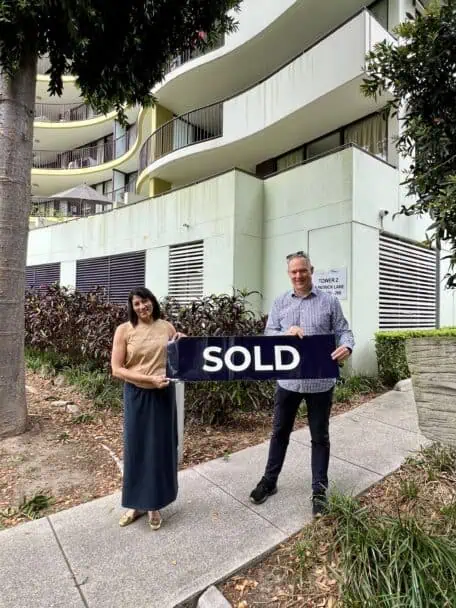
If you’re planning the step up to a family home, I’m always happy to talk it through, whether you’re looking in the inner west (Ashgrove, Bardon, Red Hill, Paddington, The Gap and Auchenflower) or anywhere across Brisbane. You can book a free discovery call at a time that suits you.
Take care, Sam Price. Buyer’s Agent and Registered Property Valuer, Brisbane.
Sources: Cotality (RP Data) suburb profile reports, 12 months to October 2026, and RP Data sold records; Cotality Home Value Index, November 2026 release (data to 31 October 2026); Queensland Revenue Office transfer duty rates and home concession rates; Reserve Bank of Australia, cash rate decision of 3 November 2026.
Before You Buy in Brisbane
The checks I run on every home, in one guide
- The flood check most buyers skip, step by step with the official maps
- Character overlays, zoning and what’s being built next door
- School catchments, noise, flight paths and easements
Just want my monthly newsletter? Sign up here
